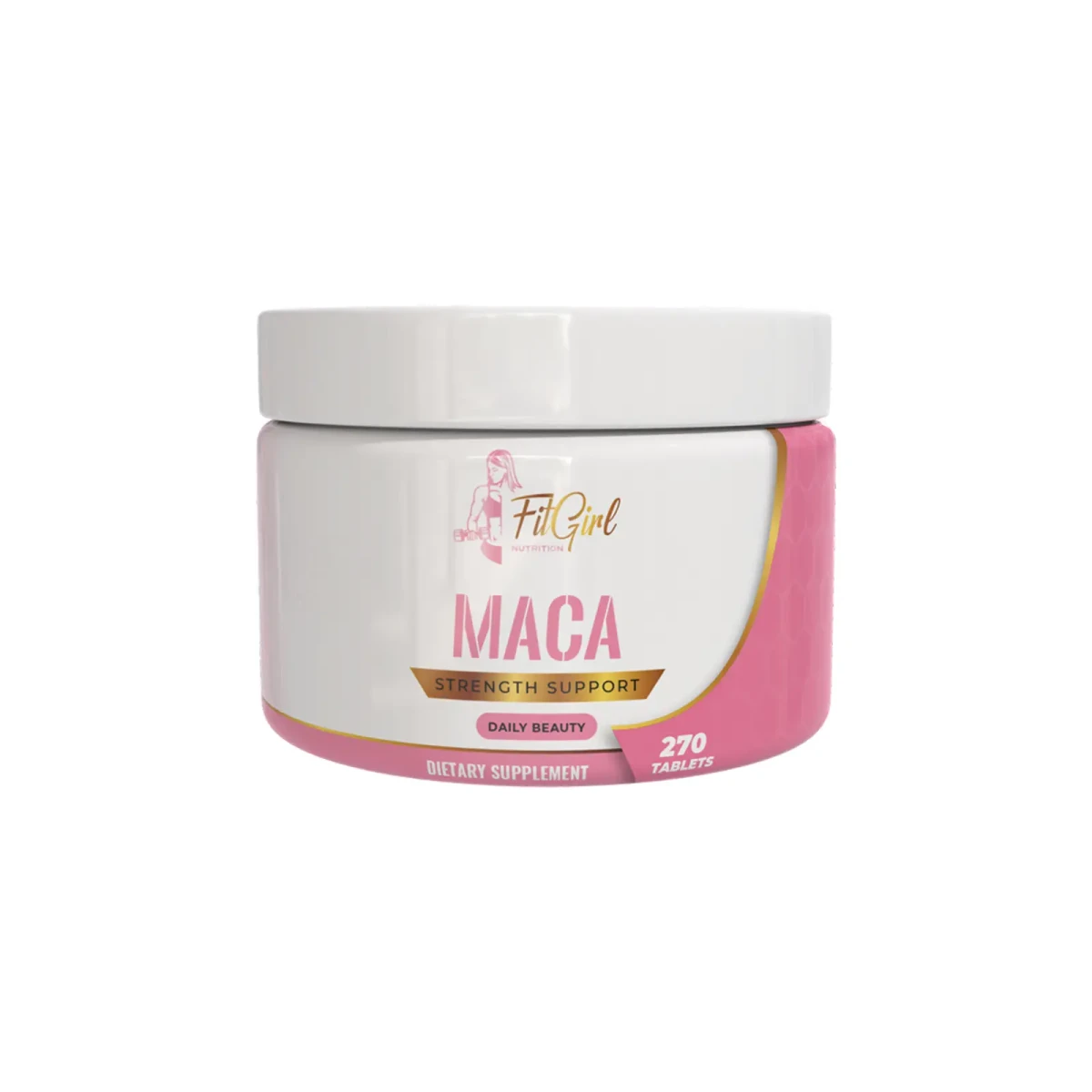
FITGIRL / Ingredient library
Maca · Lepidium meyenii
Content reviewed:
Ingredient information is not a product efficacy study. A publication, traditional use or a link to an ingredient does not authorise a health claim. [5]
Identity & classification
Lepidium meyenii Walp., a member of the Brassicaceae family. The swollen underground hypocotyl/root is the harvested plant part; powder and extract are different preparations. [1] [2] [3]
Natural origin
Traditionally cultivated in the high Andes of Peru. Botanical origin does not confirm the cultivation country of a particular commercial batch. [1] [2] [3]
History & background
Maca has a long Andean food tradition, including dried and cooked preparations. Traditional use is historical context, not evidence of an authorised health effect. [1] [2] [3]
Production methods
Harvesting, drying and milling produce powder. Extract manufacture adds an extraction step; solvent, extract ratio and standardisation determine what that extract contains. These details are not confirmed for FitGirl. [1] [2] [3]
FitGirl raw material: the supplier, country of origin, batch specification and manufacturing process have not been independently verified. General production methods below do not establish the origin of this product.
Nutritional properties
Whole maca and an extract do not have interchangeable nutrient profiles. An extract weight cannot be converted into a root equivalent without a verified extraction ratio. [1] [2] [3]
Food & sports nutrition
The tablet format describes how the ingredient is supplied. It does not establish a particular need for women or for strength training. [1] [2] [3]
Research & limitations
Preparations and study methods vary. No maca health claim is used here. “On hold” is not an authorisation; any reliance on transitional rules requires claim-specific legal assessment, including the C-386/23 judgment. [1] [2] [3]
Approved health claims
No authorised maca health claim is used. Botanical “on-hold” status is not approval. No specific maca claim and applicable transitional route have been legally substantiated for these products; they remain blocked for publication. Traditional use is historical information only. [4] [5] [3] [2]
Scientific references & product sources
- Gonzales G.F. (2012). Ethnobiology and Ethnopharmacology of Lepidium meyenii (Maca), a Plant from the Peruvian Highlands · DOI: 10.1155/2012/193496
- Court of Justice of the European Union (2025). Novel Nutriology, C-386/23, ECLI:EU:C:2025:304, 30 April 2025
- European Commission (2026). EU Register of nutrition and health claims
- European Commission (2012; consolidated 2025). Regulation (EU) No 432/2012 — Annex: authorised health claims and conditions
- European Parliament and Council (2006). Regulation (EC) No 1924/2006 — Articles 5, 6, 10, 28 and Annex